Which Polarshine Marine compound should I choose?
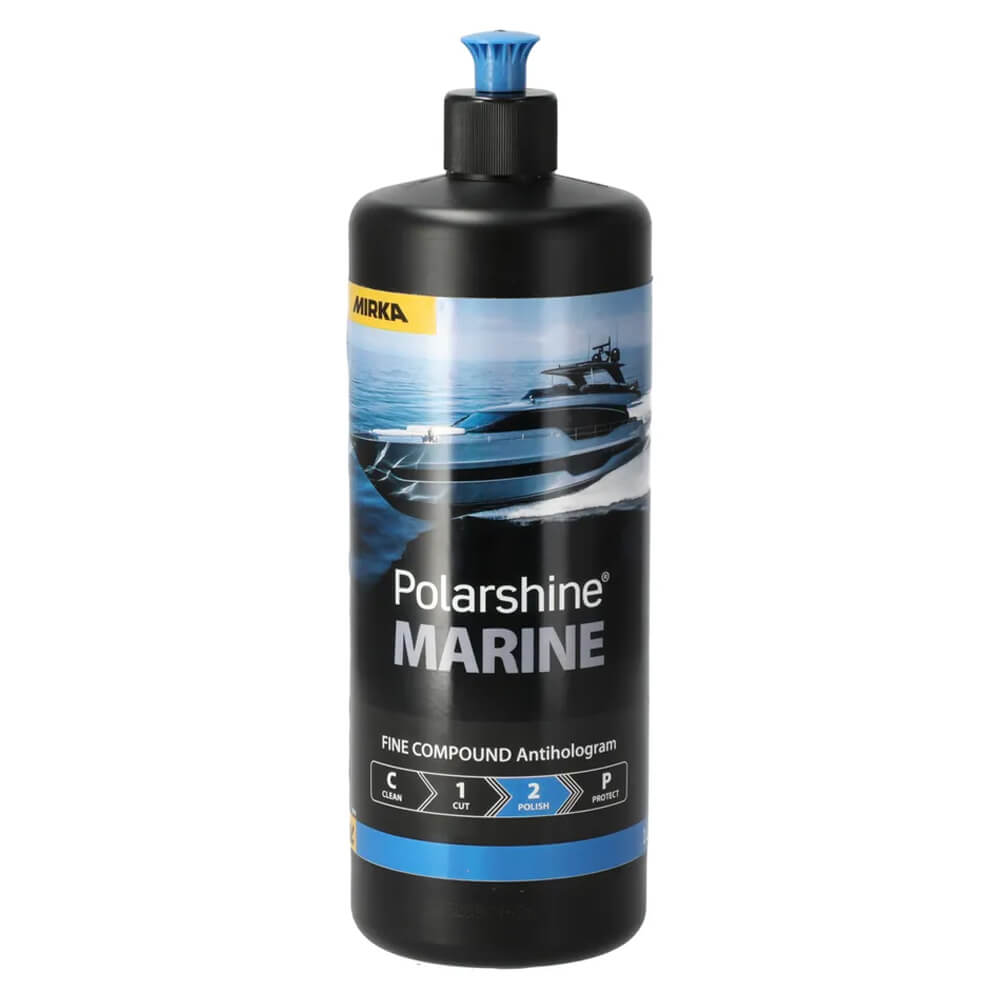
Choose Heavy Cut for severe oxidation, deep scratches, and sanding scratches from grit 800 and finer. Choose Medium Cut for oxidation and sanding scratches from grit 1000 and finer, especially on topcoat and clearcoat surfaces. Choose Fine Compound Antihologram as the finishing step to remove holograms and swirl marks while improving gloss on gelcoat, topcoat, and clear coat surfaces.
Can Heavy Cut or Medium Cut be used as a one-step polish?
Yes. Heavy Cut and Medium Cut can both be used as a one-step solution on light-coloured surfaces, depending on the level of oxidation and scratches. Use Heavy Cut for harder gelcoat restoration and heavier defects, and Medium Cut for topcoat and clearcoat surfaces where a balanced cut and gloss finish is needed.
When should I use Fine Compound Antihologram?
Use Fine Compound Antihologram after Heavy Cut or Medium Cut when you want to remove holograms, swirl marks, or polishing marks left from previous stages. It is the best choice for the final gloss refinement step on marine gelcoat, topcoat, and clear coat surfaces.
What pads should I use with each compound?
Use Heavy Cut with a twisted wool or lambswool pad. Use Medium Cut with twisted lambswool or lambswool pads. Use Fine Compound Antihologram with foam polishing pads, such as yellow or black M foam pads.
What machine speed should I use?
For Heavy Cut, use a rotary polisher at 1000–1500 rpm. For Medium Cut, use a rotating/rotary polisher at 800–2000 rpm. For Fine Compound Antihologram, use a rotating/rotary polisher at 800–2000 rpm.
Are Polarshine Marine compounds water borne and silicone-free?
Yes. The Polarshine Marine Heavy Cut, Medium Cut, and Fine Compound Antihologram compounds are water borne and silicone-free, making them suitable for professional marine polishing workflows where clean finishing and easy wipe-off are important.